Back to Blogs
Why many industrial electrification projects hit the grid limit

Sebastian Lanfranco
March 13, 2026
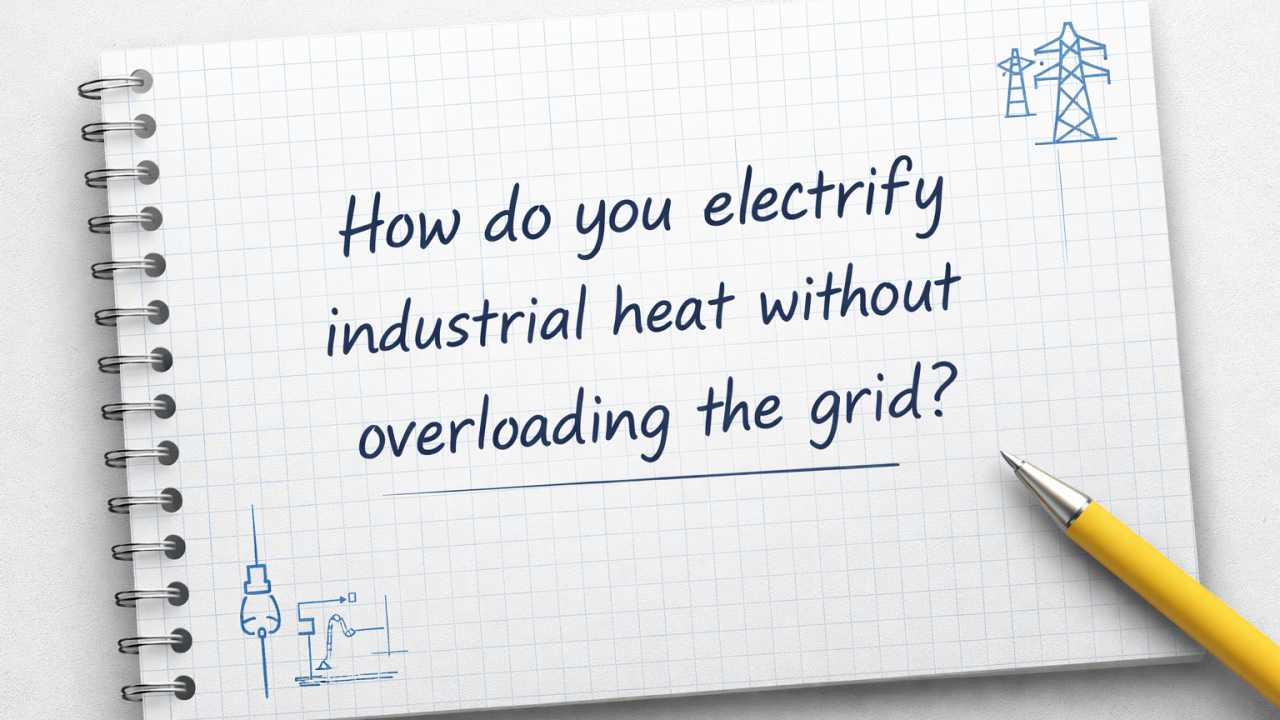
Electrifying industrial heat is often framed as a question of energy supply.
But in many real projects, the first constraint shows up somewhere else entirely.
Electrical infrastructure.
Much of industrial heat today comes from combustion systems (i.e., boilers, furnaces, kilns). These systems can deliver large amounts of thermal energy while requiring relatively little electricity for pumps, fans, and controls.
When you electrify that same process, the physics of the system changes.
Suddenly, the electrical connection has to carry the full thermal load.
Consider a simple example:
A site producing process heat with a gas boiler might deliver 10 MW of thermal output, while only requiring a few hundred kilowatts of electricity to run auxiliary equipment.
Replace that system with direct electric heating and the electrical demand can jump to 10 MW or more.
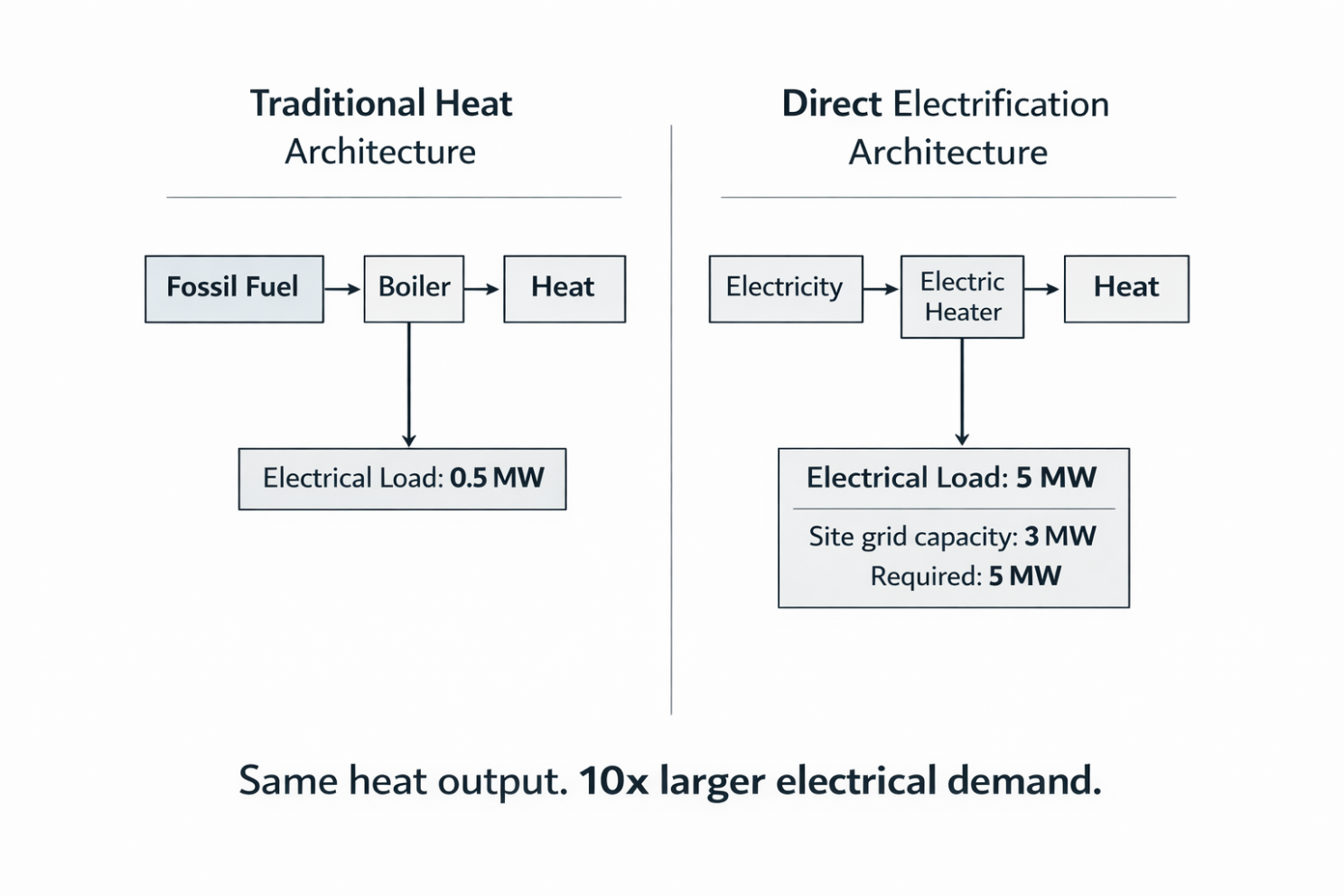
Same heat output. Very different infrastructure requirement.
This difference matters more than many early electrification discussions acknowledge.
The more I dig into real electrification projects, the more I see this pattern showing up.
In theory, electrification can solve a large share of industrial emissions.
In practice, many projects run into the same bottleneck:
Available electrical capacity.
In many cases, electrification itself isn’t the barrier. The real constraint is how much electrical capacity the site and the local grid can actually support.
Upgrading that capacity can require:
- New substations
- Larger transformers
- Upgraded connection lines
- Lengthy grid interconnection processes
In some regions, these upgrades are straightforward.
In others, they can take years.
That reality changes how these projects need to be designed.
Electrifying industrial heat isn’t just a technology challenge.
It’s also an infrastructure challenge.
And solving it will require thinking carefully about how electrical demand, industrial processes, and energy systems interact.
Question for those of you working on real electrification projects:
Where do things usually get stuck?
Equipment,
infrastructure,
or something else?


Recent Posts
September 16, 2026
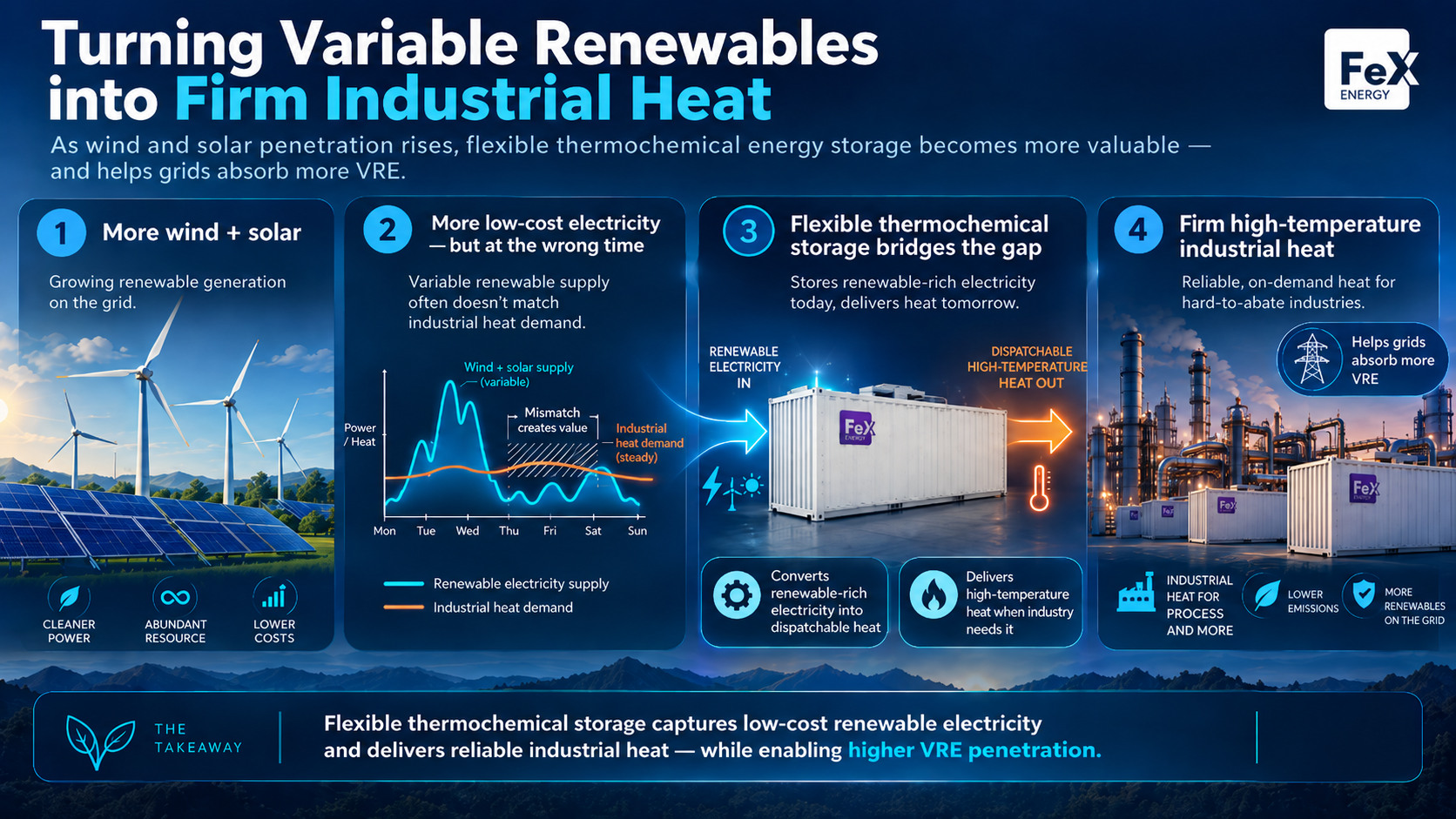
WHITEPAPER: Why Variable Renewable Energy Makes Flexible Industrial Heat Storage More Valuable - and Vice Versa
How flexible thermochemical energy storage turns variable renewable electricity into firm, high-temperature industrial heat.

Hayden Smith
June 2, 2026
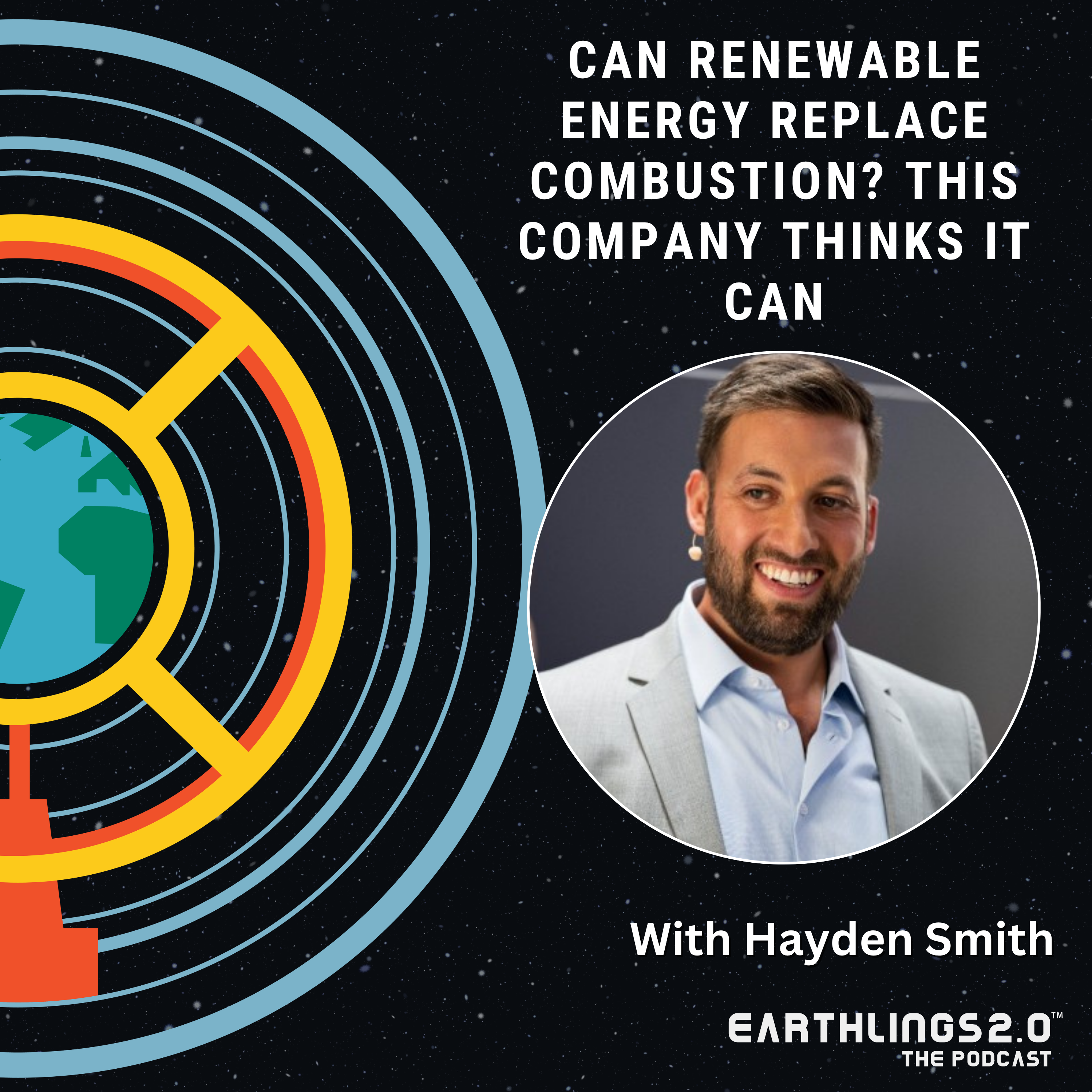
Earthlings 2.0 Podcast: Can Renewable Energy Replace Combustion?
🎧 Listen now: #163 - Can Renewable Energy Replace Combustion? This Company Thinks It Can With FeX Energy - Earthlings Podcast

FeX Energy
March 13, 2026
Why many industrial electrification projects hit the grid limit
Electrifying industrial heat is often framed as a question of energy supply. But in many real projects, the first constraint shows up somewhere else entirely. Electrical infrastructure.
Sebastian Lanfranco

Iron-based energy storage delivering firm heat and power on demand.