Industrial heat,
stored in iron.
A thermochemical energy storage system that stores electricity in iron and releases it as high-temperature heat, with no degradation over time.
High-temperature heat.
Long-duration energy.
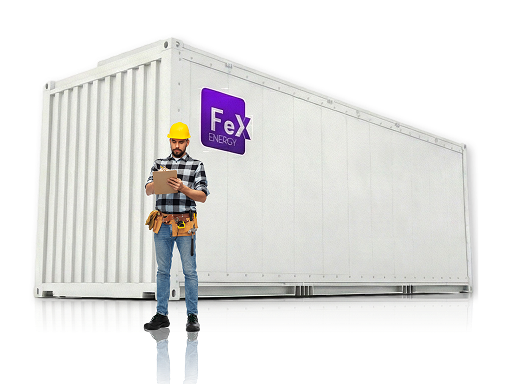
Thermochemical storage system delivering high-temperature heat and long-duration energy in a compact modular design.

Continuous High-Temp Heat
Industrial-grade process heat up to 900°C. Delivered on demand.

Long Duration
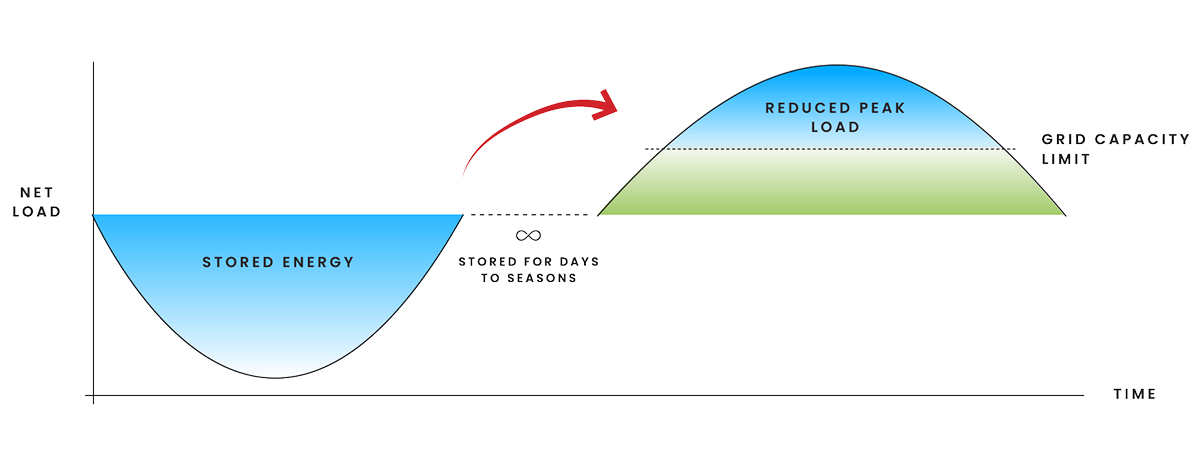
Energy stored for days, weeks, or months with no degradation.

Compact & Modular
Containerized systems designed to scale in constrained sites.

Heat & Power Delivery
Heat-first output with optional power when required.


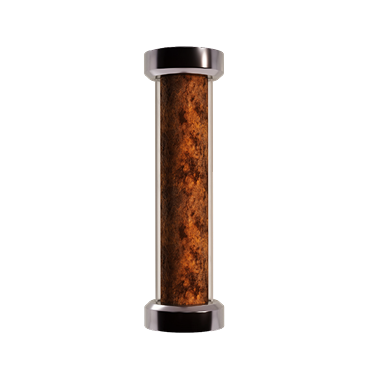
Safe, long duration and proven at industrial scale.
Iron eliminates cost, safety, and supply limits. Built on a material already produced at global scale.

Dense
High energy density in compact footprint. Works where space is constrained.

Safe
Non-toxic. Non-flammable. No pressure systems. No thermal runaway.

Stable
No degradation. No self-discharge. Delivers consistent output over time.

Abundant
Globally available. No rare materials. No supply chain risk.

Three configurations.
One core system.
Built to scale.
Modular energy infrastructure, deployed at any scale. All configurations run on the same thermochemical core.
Capability
DEPLOY
Arc-S
SCALE
Arc-X
Target Power
1–50 MWth
50–500+ MWth
Discharge Duration
4 hrs to seasonal
4 hrs to seasonal
Output
Heat, power, or both
Heat, power, or both
Construction
Containerized
Custom / bespoke build
Maximum Outlet Temperature
500-900°C
>900°C
Storage Density (per 40-ft)
~35 MWh (excl. BoP)
Scales per requirement
Indicative LCOS (incl. BoP)
~$0.06/kWh
~$0.04/kWh
Sustained heat.
Delivered at target temperature.
Delivers stable high-temperature heat across extended discharge.

Reduce peak exposure.
Lower energy cost.
Delivers stable high-temperature heat across extended discharge.
We deliver sustained heat.
Where others can’t.
Designed to scale from MW to GW operations.
Capability

FeX Energy
Batteries
(Li-ion)
Thermal
storage
High-temperature heat <500–900°>


Ultra-long duty cycles
Peak draw reduction

Brownfield footprint
Grid-constrained sites
Frequently Asked Questions
How does iron-based thermochemical energy storage work?
FeX's Iron Arc Reactor stores energy through a reversible chemical reaction between iron and iron oxide, essentially controlled rusting and un-rusting. Electricity drives a direct reduction reaction that converts iron oxide into iron, storing energy in the metal. When heat is needed, air reacts with the iron in an exothermic oxidation process, releasing sustained high-temperature heat up to 900°C. The iron oxide is then ready to recharge. There is no degradation across cycles.
What temperatures does the Iron Arc Reactor reach?
The system delivers sustained thermal output up to 900°C, the temperature range required for industrial-grade process heat including drying, calcination, steam production, and furnace applications. This is a fundamental differentiator from lithium-ion batteries, which are limited to electricity delivery, and from most thermal storage technologies, which plateau well below industrial process temperatures.
How energy-dense is iron compared to other storage mediums?
Iron is approximately ten times more energy-dense per unit of footprint than lithium-ion battery systems for equivalent stored thermal energy. A single 40-foot FeX container stores 35+ MWh and can deliver up to 9 MW, compared to roughly 1 MW deliverable from a comparable lithium-ion container. This density advantage is why FeX can be deployed at constrained brownfield industrial and mining sites.
Does the system degrade over charge-discharge cycles?
No. Unlike lithium-ion batteries, which lose capacity with each charge cycle, iron does not degrade through the oxidation-reduction process. The storage medium returns to its original state with each recharge, giving the system a long service life with minimal performance loss over time.
Does the system output temperature decrease rapidly during discharge?
No. Thermal energy storage systems (e.g. sensible and latent heat) have a rapid exponential decay of temperature as the heated medium cool during discharge. Unlike these systems, the Iron Arc Reactor provides a much more stable thermal output. This results in 5x longer time at target output temperature, much lower initial storage medium temperatures, and therefore less integration complexity and cost.
Where did FeX Energy's technology originate?
The Iron Arc Reactor technology was developed at McGill University's Alternative Fuels Laboratory under Professor Jeffrey Bergthorson, following more than fifteen years of research into iron as a zero-carbon energy carrier. FeX Energy was founded to commercialize that research and bring iron-based thermochemical storage into real industrial deployments.
What is the levelized cost of storage for the FeX system?
FeX targets a levelized cost of storage of approximately $0.04–0.05/kWh for thermal energy delivered at scale, competitive with or below diesel in most remote and industrial configurations when full fuel logistics costs are included. Techno-economic analyses across multiple verticals have validated realistic cost-competitiveness against incumbent fuels in the right operating conditions.
Is FeX's iron storage technology safe to operate at industrial sites?
Yes. Iron is chemically stable, non-toxic, non-flammable, and requires no pressure containment or special hazardous materials handling. The system operates at ambient pressure with no combustible gases, no liquid electrolytes, and no fuel storage risk on site. This simplifies permitting, insurance, and operational safety management compared to hydrogen or diesel alternatives.
If your campus energy system needs reliable heat, we should talk.
FeX supports district energy systems for universities, hospitals, and communities.
Iron-based energy storage delivering firm heat and power on demand.